Smart Lighting
What Is RGBW LED Lighting? A Complete Guide
Everything you need to know about RGBW LED lighting — what it means, how it works, and why it's the smart choice for a professionally installed home.
If you've been researching smart lighting, you've almost certainly come across the term RGBW. It's one of the most important pieces of technology behind modern lighting design, yet it's rarely explained in plain English. Here's what it actually means, how it works, and why we recommend it for the vast majority of the smart lighting systems we install.
What Does RGBW Stand For?
RGBW stands for Red, Green, Blue, White - the four individual LED chips housed within a single light fitting. The red, green, and blue channels can be mixed in varying intensities to produce millions of distinct colours, from a deep ocean blue to a warm sunset amber. The fourth channel - the dedicated white LED - is what sets RGBW apart from standard colour-changing lighting.
Standard RGB lighting, without the dedicated white chip, has to fake white light by blending the red, green, and blue channels together. The result is usually a slightly washed-out, faintly tinted white that isn't well suited to everyday living. RGBW solves this by including a true white LED alongside the colour channels, so your lighting can move seamlessly between vivid colour scenes and clean, natural white light for cooking, reading, or working from home.
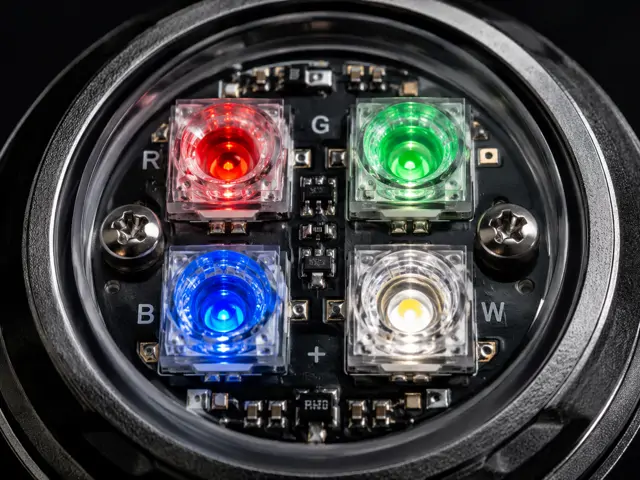
This is why RGBW has become the preferred choice for smart home installations across the UK. It gives you the best of both worlds in a single fitting - the flexibility of full colour-changing lighting, and the everyday practicality of good-quality white light - without needing separate fittings or compromising on either. It's a genuinely different technology from the RGB smart bulbs sold in high-street shops, most of which lack a true white channel and rely on a wireless hub with limited integration into a wider home automation system.
RGBW vs standard LED lighting. Standard white LED downlights are excellent at doing one thing well - providing consistent, efficient white light - but they offer no flexibility beyond dimming. RGBW fittings do everything a standard LED can do, using the same dedicated white channel, while adding the option of full colour on top. In practical terms, that means there's very little reason to specify standard fixed-colour LEDs over RGBW in a professionally installed system, since the cost difference is often modest once installation labour is factored in, and the flexibility RGBW provides only grows more valuable as your smart home system expands.Every home is different, and so is every lighting design. We work with a wide range of smart LED lighting products to create a layered scheme that combines task lighting, ambient lighting, and feature lighting - each fully controllable through your automation system.
How RGBW Lighting Works
Inside every RGBW fitting, the red, green, blue, and white LEDs are individually addressable - meaning your control system can adjust each channel's brightness independently. When you select a colour or scene, whether from the Loxone app, a wall panel, or a voice command, the controller sends a precise instruction to the fitting specifying exactly how much of each colour channel to output.
To create warm white light, the system simply uses the dedicated white channel on its own, giving clean, flicker-free illumination at whatever brightness and colour temperature suits the room. To create a colour scene - a rich purple for a relaxing evening, or a crisp blue for a home office - the red, green, and blue channels are blended together, entirely independently of the white channel. Because these four channels sit within one fitting and are driven by the same controller as the rest of your home, RGBW lighting integrates seamlessly with scenes, schedules, and sensors across your whole smart home system, rather than operating as an isolated gadget.
The precision of this colour mixing is what separates a professionally specified RGBW installation from a budget colour-changing bulb. Each channel can typically be adjusted across 256 levels of brightness, giving millions of possible colour combinations and far smoother transitions between them - so a scene fading gently from daytime white to evening amber looks natural rather than stepped or jarring. This level of control is managed centrally by your Loxone Miniserver or equivalent controller, which is also what allows RGBW lighting to be triggered automatically by sensors, schedules, or events elsewhere in your home, rather than requiring a manual colour selection every time.
Most of your lighting usage, day to day, will be ordinary white light rather than colour scenes. A dedicated white LED chip delivers a genuinely clean, comfortable light for everyday living - reading, cooking, working - while still giving you the full colour palette on demand for the moments that call for it. This is the single biggest practical advantage RGBW has over simpler RGB or single-colour smart lighting, and it's the main reason we specify it as standard across the majority of our residential projects, whatever the property type or budget.
Benefits of RGBW in a Smart Home
RGBW lighting isn't just a novelty feature - used well, it changes how a home feels and functions day to day.
Scene Creation
Recall a "Movie Night", "Dinner Party", or "Relax" scene with a single tap, instantly setting the right colour, brightness, and mood across the whole room.
Circadian Rhythm Support
Colour temperature can shift automatically through the day - energising cool white in the morning, warm amber in the evening - to support your natural sleep-wake cycle.
Mood Lighting
Set the tone for any occasion, from a calm blue reading nook to a vibrant party atmosphere, without changing a single fitting.
Visual Notifications
Colour-code events around your home - a flash of amber when the doorbell rings, or a soft red pulse if a security sensor is triggered.
Beyond individual features, the cumulative effect of a well-designed RGBW scheme is a genuine transformation of how a living space feels. Kitchens can shift from bright, practical task lighting during the day to a warm, sociable glow for entertaining in the evening. Living rooms can move seamlessly from crisp daytime white to a cinematic scene at the touch of a button. Bedrooms can support a calming wind-down routine in the evening and a brighter, energising start to the morning, all without a single manual switch being touched. It's this everyday versatility - not just the novelty of colour - that makes RGBW such a popular choice among our clients, and why it forms the default recommendation in most of the lighting schemes we design.
RGBW Lighting Options
RGBW technology is available across a wide range of fitting types, so you can build a layered lighting scheme throughout your home rather than relying on a single style of fitting in every room. A well-designed scheme typically combines two or three fitting types within a single space - general spotlights for overall illumination, strip lighting for accent and depth, and perhaps a statement pendant as a focal point - all working together as one system rather than as separate, disconnected products.
Recessed Spotlights
The most popular choice for whole-home RGBW installations. Discreet, ceiling-mounted, and ideal for kitchens, living rooms, and bedrooms where you want flexible general lighting that disappears into the ceiling when not in use.
Pendant Lighting
Statement fittings over a kitchen island or dining table can be specified with RGBW capability, letting a striking design piece also serve as a fully programmable light source.
Strip Lighting
Ideal for under-cabinet lighting, staircases, cove details, and behind floating shelves. RGBW strip lighting adds depth and architectural interest through colour and layered brightness.
Outdoor Fixtures
Weatherproof RGBW fittings extend colour-changing lighting to patios, decking, and garden features - perfect for entertaining or marking special occasions outdoors.
RGBW Lighting in Our Projects
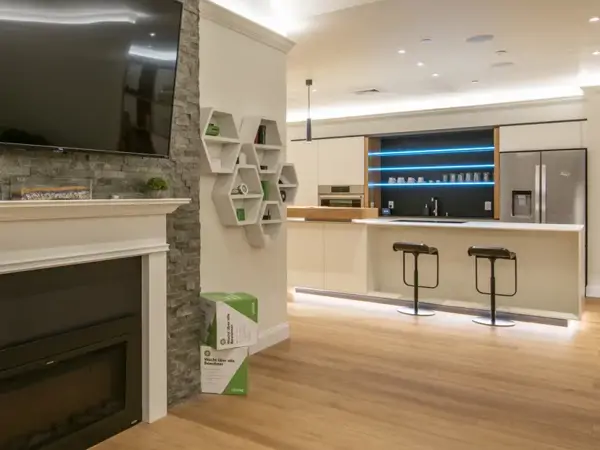
RGBW lighting features in many of the smart home projects we've delivered across the UK. Here's a small selection of how it's been used in practice.


How to Get RGBW Lighting Installed
Getting started with RGBW lighting begins with a free, no-obligation consultation. We'll visit your property, talk through the rooms and effects you have in mind, and recommend the right combination of fittings and control system - typically Loxone, for its excellent balance of reliability and value in residential RGBW installations.
From there, our full installation process takes care of everything: design, first-fix cabling (or wireless configuration for retrofits), device installation, scene programming, and a handover session so you're confident using every feature from day one. Because RGBW fittings integrate with the same central controller as the rest of your smart home, it's also worth thinking about lighting alongside any other systems you're planning - heating, security, or a home cinema - so everything can be designed and quoted together from the outset. Read more about what's involved on our Smart Lighting Installation page, check indicative pricing on our Cost Guide, or head straight to your free consultation to get a personalised quote for your project.