Home Security
Smart Alarm Systems for Your Home
An intelligent alarm that does more than make noise - flashing lights, opening blinds, live camera snapshots and mobile alerts. Designed, installed and programmed around your property.
Beyond the Siren: What Makes an Alarm Smart
Most UK homes are protected by an alarm that has one response to every situation. A sensor is triggered, a siren sounds, and a neighbour who has heard three false alarms this year draws the curtains and carries on. The system has done exactly what it was designed to do, and almost nothing useful has happened.
A smart alarm system works differently. Because it is part of your wider home automation system rather than a sealed box on the utility room wall, it can draw on everything else in the property to respond. Lights come on across the ground floor. Blinds lift so the house is visible from the street. Your phone rings, and a snapshot from the nearest camera tells you whether you are looking at an intruder or a fox on the patio.
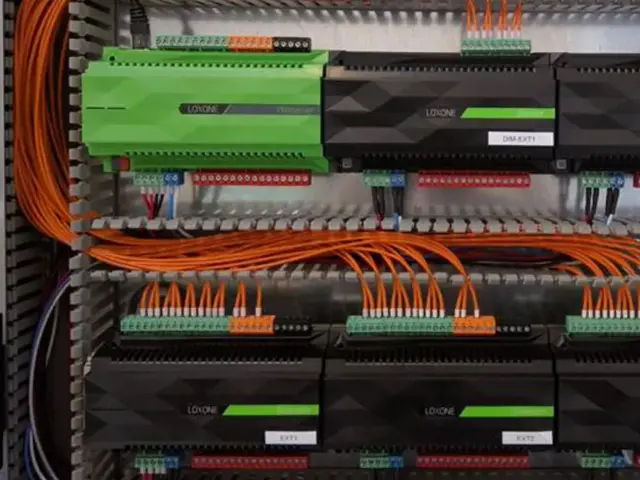
We design and install intelligent alarm systems built primarily on Loxone, the platform we specify most often for UK homes because its alarm logic runs locally on the Miniserver and integrates natively with lighting, shading, access control and cameras. The result is a home alarm that behaves like a considered response rather than a reflex.
Why We Specify Loxone
Your alarm logic lives in your house, not in someone else's data centre
Loxone's alarm functions are processed on the Miniserver installed in your property. Arming, disarming, sensor logic and every automated response continue to work if your broadband drops, if a cloud service has an outage, or if a manufacturer changes its subscription model. Internet connectivity is used for what it is genuinely good at — sending you alerts and letting you check in remotely — rather than being a single point of failure standing between you and your own front door.
It also means there is no monthly fee attached to the core functionality. The system you pay for is the system you own.
How Smart Alarms Work
An intelligent alarm system is built from the same fundamental building blocks as a conventional one — detectors that notice something has changed, and a controller that decides what to do about it. The difference lies almost entirely in the quality of that decision. Understanding how smart alarm sensors feed into the system helps explain why the responses are so much more useful.
Every detector in the property reports back to the Loxone Miniserver over a wired Tree or Air connection. The Miniserver knows far more than a standalone alarm panel ever could: whether anyone is home, what time it is, whether the back door was opened from the inside two seconds earlier, whether the motion in the hallway followed motion in the garden or occurred in isolation. That context is what allows the system to distinguish a genuine intrusion from ordinary domestic life.
Motion Sensors
Ceiling and wall-mounted presence detectors monitor internal spaces. The same motion sensor that arms the alarm also switches lights and reports room occupancy to the heating system, so it earns its place several times over.
Door & Window Contacts
Flush-mounted magnetic contacts detect when a door or window is opened. Because they are recessed into the frame during installation, they are effectively invisible once the door is closed.
Glass-Break Detectors
Acoustic detectors listen for the specific frequency signature of breaking glass, covering large glazed areas and bi-fold doors where a contact alone would not detect forced entry.
Perimeter Detection
External motion sensors and camera analytics create an early warning layer at the boundary, letting the system react before anyone reaches the building itself.
Environmental Sensors
Water leak, smoke and temperature sensors share the same alerting infrastructure, so a burst pipe reaches you through exactly the same channel as an intrusion.
Loxone Miniserver
The brain of the system. It holds the alarm logic, decides how to escalate, and coordinates every other part of the home in its response.
Progressive Escalation, Not All-or-Nothing
The most significant advantage of an intelligent alarm system is that it has more than one gear. Rather than jumping straight from silence to a full siren, the system builds its response in stages, which is the single biggest reason our clients report far fewer nuisance activations than they experienced with their previous alarm.
Detection & Assessment
A sensor reports activity. Before doing anything visible, the system checks context - is the house armed, is anyone home, has this sensor been triggered in isolation or as part of a pattern that suggests movement through the property?
Quiet Warning
For a single ambiguous trigger, the system responds discreetly. External lights come on, a notification reaches your phone with a camera snapshot attached, and the event is logged. Most opportunists leave at this point, and you have not woken the street to achieve it.
Active Response
If activity continues or a second detector confirms the first, the response escalates. Internal lighting flashes across the ground floor, blinds open to make the interior visible from outside, and audio alerts play through the ceiling speakers.
Full Alarm & Alert
A confirmed intrusion triggers the complete response: siren, full lighting, an automated phone call to you and any nominated contacts, and where you have chosen it, a signal to a professional monitoring centre.
Every threshold in this sequence is configurable. Some clients want the quiet warning stage to last longer; others prefer a shorter fuse overnight than during the day. We set these behaviours with you during commissioning and adjust them freely afterwards.
Automated Alarm Responses
Because the alarm can call on the whole house, the range of automated alarm responses available to it is far wider than a siren and a strobe. These are the intelligent alarm response options we most commonly configure, in whatever combination suits the property and the household.
Internal Lights Flashing
Every light in the property pulses at full brightness. It is disorientating for anyone inside, immediately obvious from the street, and impossible to ignore.
External Lighting Activation
Driveway, garden and facade lighting switches to full output, removing the cover that makes a property attractive in the first place and improving camera footage quality.
Blinds & Curtains Open
Motorised shading retracts so the inside of the house is visible to neighbours and passers-by. Very few intruders are willing to continue in a fully lit, fully visible room.
Speaker Announcements
Ceiling speakers deliver a siren, a spoken warning, or both. Announcements can be zone-specific - a warning downstairs while the bedrooms stay quiet.
Automated Phone Calls
The system places a call to you and to any nominated contacts, working down the list until someone answers. A call cuts through when a push notification would be missed at 3am.
Mobile Alerts with Snapshots
Push notifications arrive with a still image from the nearest camera, so you can assess the situation in a couple of seconds rather than opening an app and hunting for the right feed.
Triggered Camera Recording
Alarm events instruct the CCTV system to record at higher quality and bookmark the timeline, so the relevant footage is easy to find afterwards.
Integration with Your Smart Home
A standalone alarm can only ever do what an alarm does. A connected alarm system inherits the capabilities of everything else in the property — and, just as importantly, everything else in the property becomes more useful because it knows the alarm state. This smart alarm integration is what separates a whole-home system from a security product bolted onto a house.
Lighting & Presence Simulation
When the house is armed and empty, the system replays realistic lighting patterns based on how you actually live rather than switching a lamp on a timer. Rooms light in a plausible sequence, blinds move at sensible hours, and the property reads as occupied. Explore smart lighting →
CCTV & Cameras
Detectors and cameras corroborate each other. Motion at the boundary tells a camera where to look, alarm events raise recording quality, and any alert you receive arrives with visual evidence attached. Explore CCTV systems →
Locks & Access Control
Arming the alarm as you leave can secure the perimeter automatically. A confirmed alarm can lock internal doors to contain movement, while unlocking the front door with a recognised NFC tag disarms the system without a keypad code. Explore smart locks →
Heating & Safety Systems
The same logic that handles intrusion handles genuine emergencies. A smoke detection event can shut down the boiler and unlock escape routes; a leak detector can close a motorised valve before the damage spreads. Explore smart heating →
Arming and disarming works the way you want it to: a wall switch by the door, an NFC tag, the Loxone app, a geofence that arms the house when the last person leaves, or a schedule that puts the property into night mode automatically.
Installation & Setup
Smart alarm installation begins with a survey of the property rather than a product list. We look at how the building is laid out, where the genuine vulnerabilities are, how the household moves through the space day to day, and what is achievable without disruptive building work. That assessment determines sensor placement, and good placement matters more to real-world performance than the specification of any individual device.
Discretion is a priority throughout. Door and window contacts are recessed into frames, motion detectors are chosen and positioned to sit quietly within the ceiling line, and cabling is routed out of sight wherever the fabric of the building allows. In occupied properties we work room by room to keep disruption contained. Full detail on how we approach security projects is covered on the Home Security hub page.
- Site survey, vulnerability assessment and a sensor plan specific to your property
- All detectors, contacts, cabling and Miniserver hardware
- Discreet first-fix and second-fix installation by our own engineers
- Alarm logic programming, including escalation thresholds and response sequences
- Integration with lighting, shading, cameras, access control and heating
- App configuration for every household member, with appropriate permission levels
- Handover training covering arming modes, alerts and day-to-day operation
- Ongoing support, remote assistance and system adjustments as your needs change
Common Questions
Smart Alarm Questions
Can I replace my existing alarm with a smart alarm system?
In most cases, yes. Where existing wired detectors are in serviceable condition and sensibly positioned, we can often reuse the cabling and sometimes the sensors themselves, which reduces both cost and disruption. Where the existing system is wireless or the sensor layout does not reflect how the property is actually used, a fresh install usually gives a much better result. We will tell you honestly which situation you are in after the survey.
Will the alarm go off every time the cat moves?
This is the most common frustration with traditional alarms and one of the main reasons people stop using them properly. Pet-tolerant detectors, sensible mounting heights and most importantly, the progressive escalation logic described above mean that a single ambiguous trigger produces a notification rather than a siren. The system only reaches a full alarm state when multiple signals agree that something is genuinely wrong.
Do I need a monitoring contract?
No. The system's automated responses, phone calls and mobile alerts all function without any subscription, because the logic runs locally on your Miniserver. Professional monitoring is available as an option if you want a third party to respond on your behalf - some insurers also ask for it on higher-value properties, but it is a choice rather than a requirement. We cover the trade-offs in more detail on our Home Security FAQ.
How do I arm the system if I have guests staying?
Alarm modes are fully configurable. A typical setup includes a full away mode, a night mode that arms the perimeter while leaving internal detectors inactive upstairs, and a guest mode that relaxes specific zones for a defined period. Guests can be given temporary app access or an NFC tag that expires, so nobody needs to share a code that then has to be changed afterwards.
What happens during a power cut?
We specify battery backup for the Miniserver, network hardware and detection circuits so the alarm continues to monitor and alert through a mains failure. The duration depends on the scale of the system and what you want to keep running; we size it during design and explain clearly what will and will not remain active.